
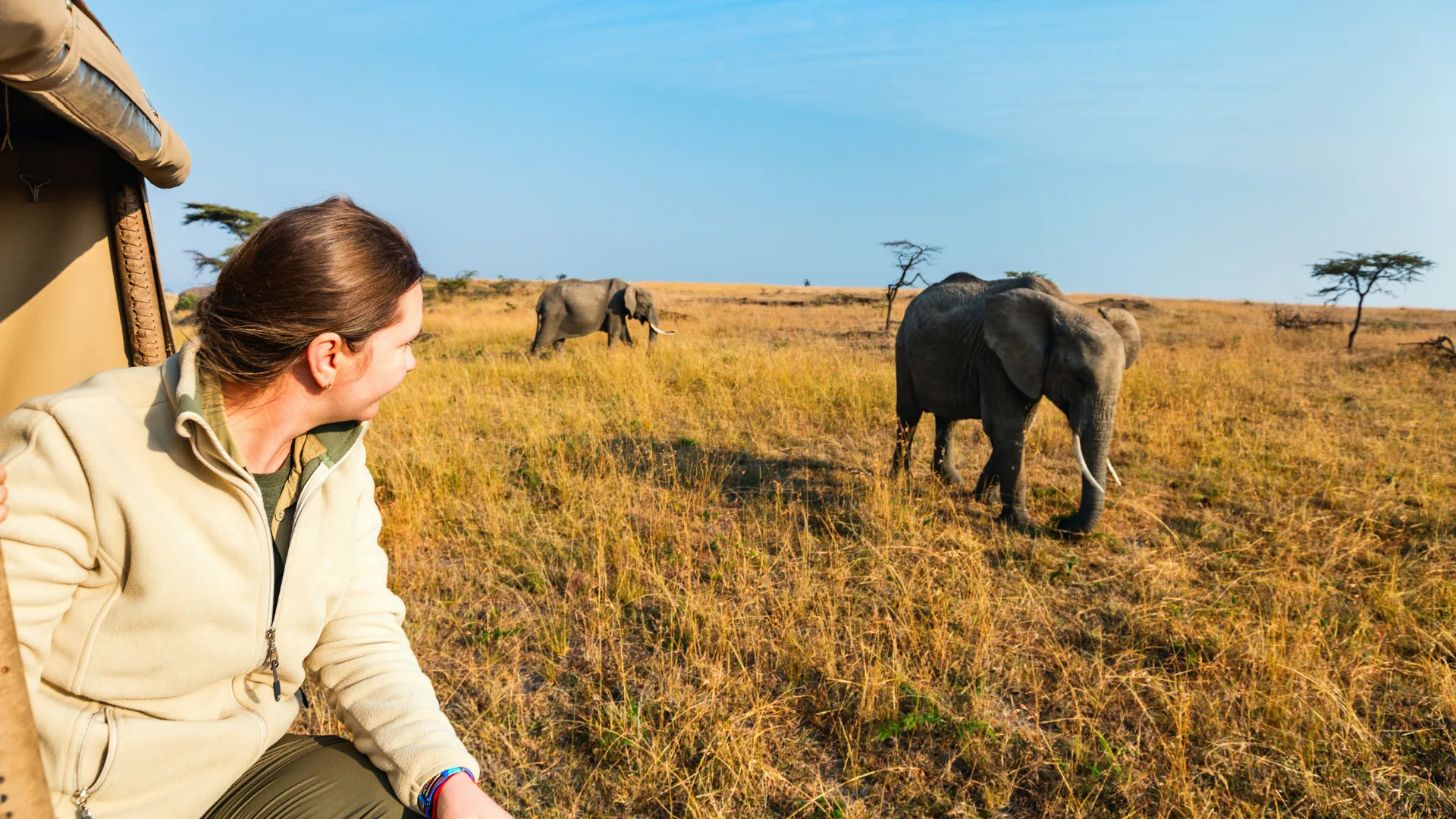
Kenya Safari Tours, Unforgettable Wildlife Experiences Crafted by Local Experts
From the thundering Mara River crossings of the Great Migration to the silent majesty of elephants beneath Kilimanjaro, Kenya safari tours deliver wildlife encounters that no documentary can replicate. Travelshoppe has been designing bespoke safari experiences across Kenya for over 30 years, and every itinerary reflects the deep local knowledge that only three decades on the ground can build.
We are members of KATO (Kenya Association of Tour Operators), IATA-accredited, and the exclusive Kenyan partner of GlobalStar Travel Management. Whether you are planning your first Big Five game drive or your tenth visit to the Mara, our safari consultants craft itineraries that match your interests, your budget, and your sense of adventure, down to the last detail.
Why Kenya Is the World's Greatest Safari Destination
- 6Ecosystems packed into one country
- 5Big Five species, seen across multiple parks
- 1.5M+Wildebeest crossing on the annual Great Migration
- 30+Years crafting bespoke Kenya safaris
The word "safari" is Swahili for "journey," and it was here in Kenya that the modern safari experience was born. More than a century after the first explorers traded their rifles for cameras, Kenya remains the gold standard, the destination against which every other African wildlife experience is measured.
The reasons are compelling and numerous. Kenya's geography packs an extraordinary range of ecosystems into a country roughly the size of France: endless savannah grasslands in the Mara, snow-dusted equatorial peaks on Mount Kenya, flamingo-fringed soda lakes in the Rift Valley, arid northern deserts in Samburu, ancient coastal forests along the Indian Ocean, and volcanic landscapes in Tsavo that stretch to the horizon. Each ecosystem supports distinct wildlife communities, which means a week-long Kenya safari can deliver a diversity of animal encounters that would take months to replicate elsewhere in Africa.
Kenya is home to all of the Big Five, lion, leopard, elephant, buffalo, and rhino, across multiple parks and reserves. The Masai Mara National Reserve alone hosts one of the densest concentrations of predators on the planet. Amboseli National Park offers what many consider Africa's most iconic photograph: elephant herds silhouetted against the snow-capped summit of Mount Kilimanjaro. Samburu National Reserve is home to the "Special Five", species found nowhere else in Kenya's southern parks.
And then there is the Great Migration. Every year, roughly 1.5 million wildebeest, 200,000 zebra, and 500,000 gazelle complete a circular journey between Tanzania's Serengeti and Kenya's Masai Mara, crossing crocodile-infested rivers in scenes of raw, breathtaking drama. It is widely regarded as the greatest wildlife spectacle on earth, and Kenya's Mara offers the most accessible and dramatic front-row seat.
Beyond wildlife, Kenya's safari infrastructure is among the most developed in Africa. Nairobi is a major international hub with direct flights from Europe, the Middle East, Asia, and the Americas. Domestic flight networks connect the capital to safari airstrips in under an hour. Accommodation ranges from ultra-luxury tented camps with private plunge pools to affordable mid-range lodges and mobile camping setups. Kenya's guides are among the most experienced and knowledgeable in Africa, many with decades of daily game-drive experience in a single ecosystem.
At Travelshoppe, we have been part of this story since 1994. Our safari consultants have personally visited every major park and conservancy in the country, inspected hundreds of lodges and camps, and worked with guides whose names appear in our clients' Google reviews, not because we told them to mention them, but because the experience was that memorable. That depth of first-hand knowledge is what separates a Travelshoppe safari from a generic package.
Types of Kenya Safari Experiences
Kenya offers far more than the classic jeep-and-binoculars game drive. The best safari itinerary is one that matches your interests and travel style, and our team designs experiences across every format.
Classic Game Drive Safaris
The heart of the Kenya safari experience. You travel in a custom 4x4 vehicle with a pop-up roof, accompanied by an expert guide who tracks wildlife using a combination of radio networks, decades of fieldcraft, and an almost uncanny ability to predict where the action will unfold. Morning drives depart before dawn, when predators are most active and the light is sublime. Afternoon drives run from mid-afternoon until sunset, often ending with a sundowner, a cold drink in the bush as the sky turns orange.
The best parks for classic game drives include the Masai Mara (predator density, Great Migration), Amboseli (elephants and Kilimanjaro views), Tsavo (vast landscapes, red elephants), and Samburu (Special Five, riverine scenery).
Walking Safaris
Experiencing the African bush on foot transforms your understanding of the ecosystem entirely. Every sound is amplified, every track in the dust tells a story, and the proximity to wildlife creates an intimacy that game drives cannot replicate. Walking-safari arrangements, guide qualifications, age limits and escort requirements vary by conservancy and operator. Confirm the current rules directly with the named conservancy or camp before booking.
Hot Air Balloon Safaris
Drifting silently over the Masai Mara at dawn, watching herds of wildebeest and zebra from 1,000 feet above the savannah as the sun crests the horizon, a balloon safari is one of Kenya's most extraordinary experiences. Flights last approximately one hour and conclude with a champagne breakfast in the bush. Balloon safaris operate daily from several launch sites within and around the Mara and are bookable as an add-on to any Masai Mara itinerary. Demand is high during peak Migration season (July–October), so early booking is strongly recommended.
Photography Safaris
For serious photographers, Kenya offers dedicated photography safari vehicles with specially modified roofs, bean bag mounts, and flexible positioning, your guide works with you to find the optimal angle, the best light, and the patience to wait for the perfect frame. Our photography safaris are popular in the Masai Mara (predator action, Migration crossings), Amboseli (elephant portraits with Kilimanjaro), and Lake Nakuru (flamingos, rhino). We can pair you with guides who specialise in wildlife photography positioning.
Birding Safaris
Kenya is one of the world's premier birding destinations with over 1,100 recorded species, from the massive Kori bustard and lilac-breasted roller of the savannah to the rare Clarke's weaver in the coastal Arabuko-Sokoke Forest. Lake Nakuru and Lake Naivasha are legendary for waterbird concentrations, while the Mara's grasslands and Samburu's riverine forests add hundreds of species to any birder's list. Birding safaris can be standalone itineraries or woven into a broader wildlife trip.
Family Safaris
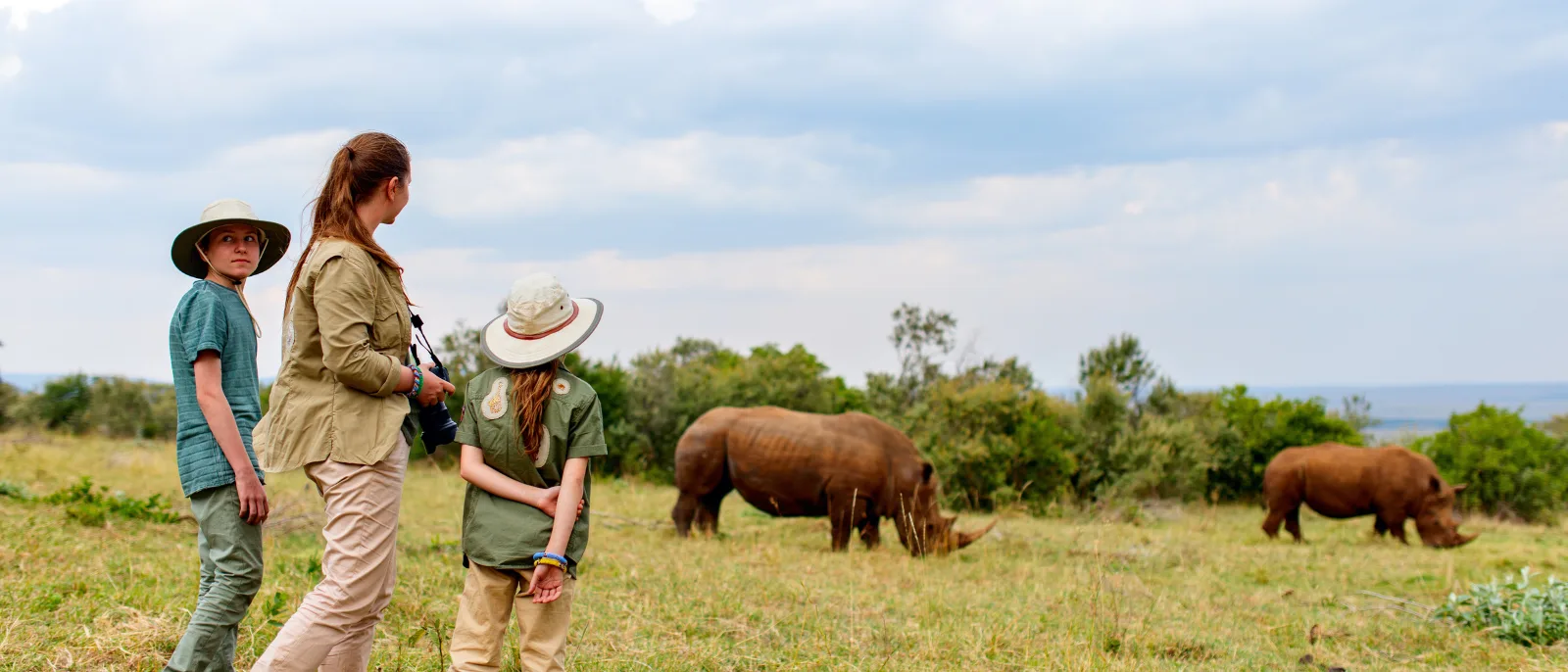
Kenya is one of the most rewarding safari destinations for families, and our family safari specialists design itineraries that keep children engaged, safe, and amazed. Family-friendly lodges and camps offer junior ranger programmes, nature walks, cultural visits, and shorter game drives suited to younger attention spans. Parks like Amboseli (flat terrain, elephant encounters at close range) and the Mara conservancies (private vehicle, flexible scheduling) work particularly well for families with children. We recommend family safaris for children aged five and above, though some lodges welcome younger guests.
Luxury Safaris
For travellers who want world-class comfort alongside world-class wildlife, Kenya's luxury safari circuit delivers at the highest level. Private conservancies bordering the Masai Mara and in Laikipia offer exclusive-use camps, personal guides, night drives (not permitted in national reserves), walking safaris, helicopter transfers between parks, bush dining under the stars, and spa treatments overlooking waterholes. A luxury Kenya safari is a deeply personal experience with no crowds, no set schedules, and no compromises.
Budget Safaris
An incredible Kenya safari does not require an unlimited budget. Group departure safaris using comfortable mid-range lodges, shared game-drive vehicles, and efficient routing can deliver outstanding wildlife experiences at a fraction of the luxury price point. Budget options include camping safaris with full-service mobile camps, overland group tours, and off-peak season travel when rates drop significantly. Our team designs budget itineraries that prioritise the parks and timing that deliver the best wildlife value for your spend.
The Big Five and Where to Find Them in Kenya
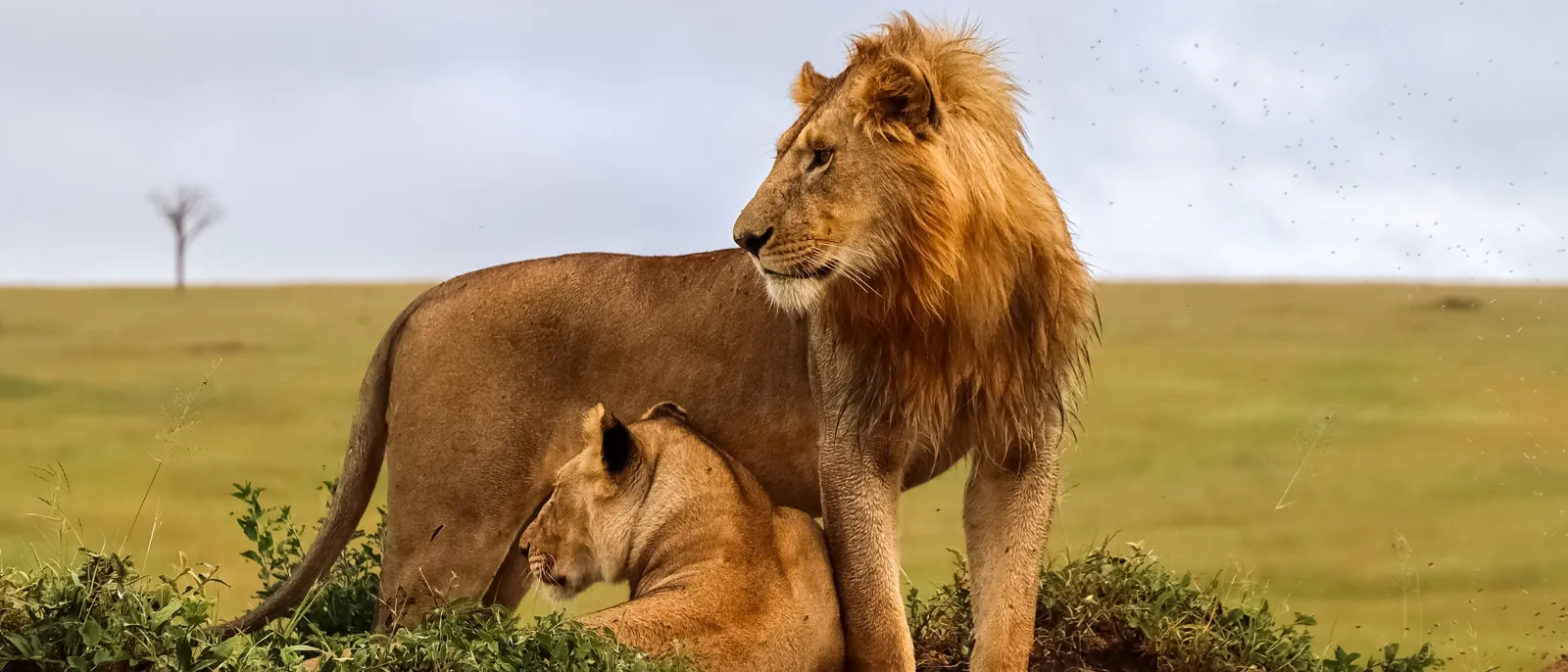
The Big Five, lion, leopard, elephant, buffalo, and rhinoceros, were originally named by hunters for the five most dangerous animals to pursue on foot. Today they represent the five most sought-after sightings on any African safari, and Kenya is one of the few countries where all five can be seen across multiple parks and reserves.
Lion

Kenya's lion population is concentrated in the Masai Mara (home to several well-known prides), Amboseli, Tsavo, Samburu, and Laikipia. The Mara offers the highest density and the best chances for observing hunting behaviour, particularly during the Migration when prey is abundant.
Leopard

The most elusive of the Big Five, leopards are solitary, nocturnal, and masters of camouflage. The Masai Mara's riverine forests and rocky outcrops are the best places in Kenya for leopard sightings, followed by Samburu (where leopards are habituated to vehicles along the Ewaso Ng'iro River) and Laikipia's conservancies.
Elephant

Kenya is home to some of Africa's most iconic elephant populations. Amboseli's elephants, among the most studied in the world, are famous for their proximity to visitors and the stunning Kilimanjaro backdrop. Tsavo's elephants are known for their distinctive red colouring, caused by dust-bathing in the park's volcanic soil. Samburu's herds navigate dramatic desert-riverine landscapes.
Buffalo

Often underestimated, the African buffalo is a formidable animal found in large herds across the Mara, Lake Nakuru, the Aberdares, and Mount Kenya's lower forests. Buffalo sightings are common on most Kenya safari itineraries.
Rhinoceros

Both black and white rhino species are found in Kenya, though they are the most difficult of the Big Five to encounter due to poaching-driven population decline. The best locations for rhino sightings are Ol Pejeta Conservancy in Laikipia (home to Kenya's largest black rhino sanctuary and the last two northern white rhinos on earth), Lake Nakuru National Park (a dedicated rhino sanctuary), Lewa Wildlife Conservancy, and Nairobi National Park (black rhino against the Nairobi skyline).
Bonus: The Samburu Special Five

Samburu National Reserve is famous for five species not found in Kenya's southern parks: Grevy's zebra (the largest and most endangered zebra species), reticulated giraffe, Somali ostrich, gerenuk (the "giraffe gazelle" that feeds standing on its hind legs), and beisa oryx.
Kenya's Premier Safari Destinations
Kenya's national parks and reserves each offer a distinct landscape, wildlife community, and atmosphere. A great safari itinerary combines two or three parks for maximum diversity. Here is what each of Kenya's premier destinations delivers.
Masai Mara National Reserve
Kenya's flagship safari destination and the northern anchor of the Great Migration route. The Mara's open grasslands support extraordinary predator concentrations, lion prides, cheetah coalitions, leopards in the riverine forest, and hyena clans. The annual wildebeest crossing of the Mara River (July–October) is the single most dramatic wildlife event on the continent. Surrounding private conservancies offer walking safaris, night drives, and lower visitor densities.
Explore our Masai Mara safari guide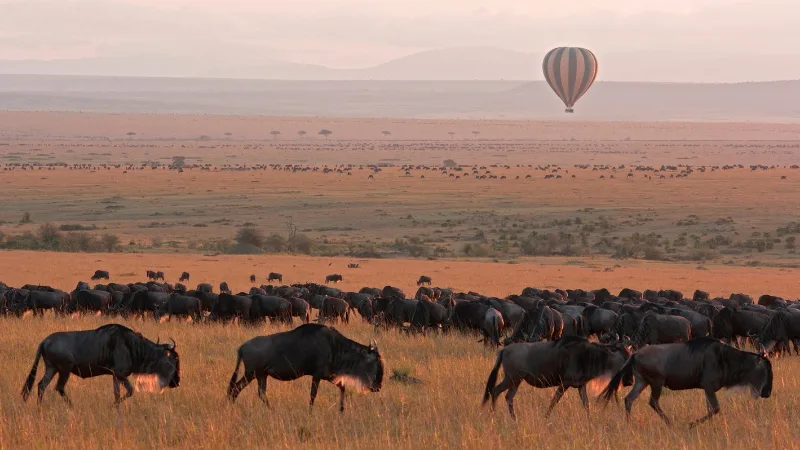
Amboseli National Park
The definitive Kilimanjaro safari. Amboseli's open plains and seasonal marshes attract large elephant herds that are among the most photographed in Africa. Clear mornings reveal the snow-capped peak of Africa's highest mountain as a backdrop to every game drive. The park is compact and easily navigated, making it an excellent choice for short safaris and first-time visitors.
Plan your Amboseli safari
Tsavo East and West National Parks
Together, Tsavo East and Tsavo West form Kenya's largest protected wilderness, a vast, rugged landscape of red-earth plains, volcanic hills, palm-lined rivers, and the Mzima Springs crystal-clear underwater viewing pool. Famous for red-dusted elephants and uncrowded game drives, Tsavo rewards travellers who value space, solitude, and raw African wilderness.
Discover Tsavo National Park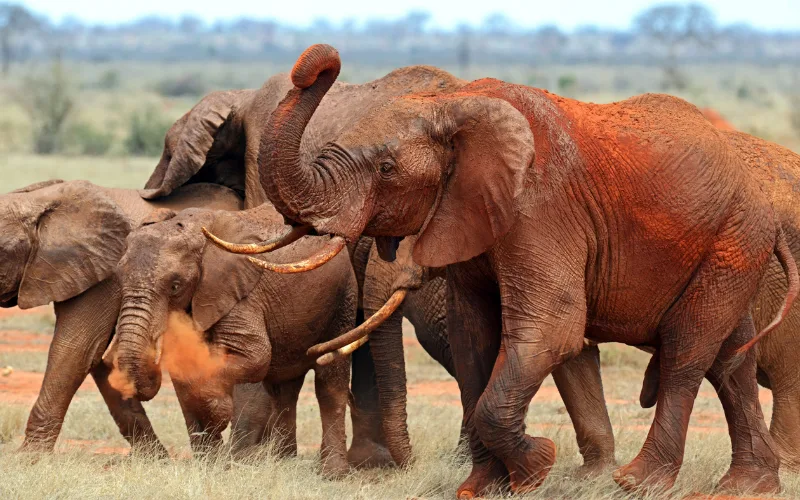
Samburu National Reserve
A dramatically different safari landscape, arid, rocky, and bisected by the life-giving Ewaso Ng'iro River. Samburu is home to the Special Five and offers some of Kenya's most atmospheric game viewing, with desert-adapted wildlife against a backdrop of distant blue mountains. The reserve is closely linked to the Samburu people, whose colourful culture adds a rich human dimension.
Explore Samburu safaris
Lake Nakuru National Park
A compact Rift Valley gem famous for its flamingo-fringed alkaline lake, dedicated rhino sanctuary, and tree-climbing lions. Lake Nakuru is one of Kenya's best parks for rhino sightings (both black and white) and is easily combined with Lake Naivasha for a Rift Valley safari circuit. The park is a two-hour drive from Nairobi.
Plan your Lake Nakuru visit
Mount Kenya National Park
Africa's second-highest mountain is a UNESCO World Heritage Site offering trekking routes through bamboo forest, moorland, and alpine zones to the summit at 5,199 metres. The lower slopes and surrounding conservancies (Lewa, Borana, Ol Pejeta) provide exceptional wildlife viewing in montane settings, a welcome contrast to the savannah parks.
Explore Mount Kenya adventures
Laikipia Plateau and Conservancies
Kenya's conservation heartland. Laikipia's privately-owned conservancies, Ol Pejeta, Lewa, Borana, Segera, Solio, and more, are home to the highest density of endangered species in East Africa, including black rhino, Grevy's zebra, wild dog, and the last northern white rhinos. Safari experiences here include walking, horseback, camel, and night drives, with an emphasis on conservation and community engagement.

Nairobi National Park and City Day Trips
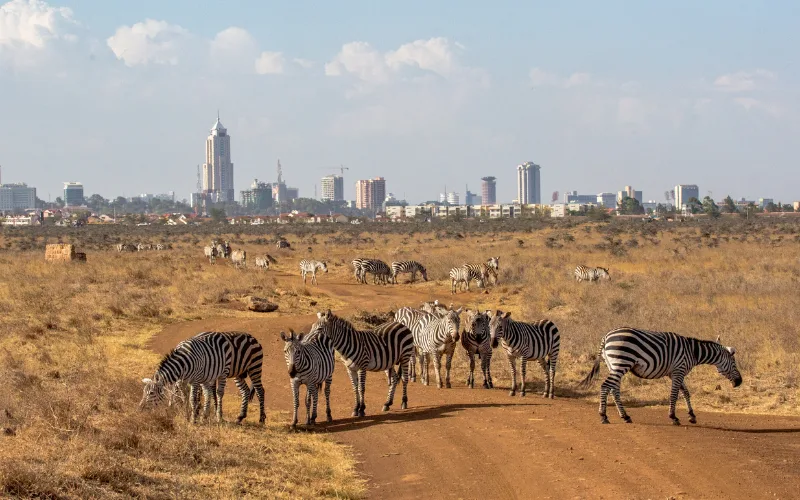
The only national park inside a capital city. Nairobi National Park offers Big Four game viewing (no elephants) against a surreal backdrop of city skyscrapers, plus easy access to the David Sheldrick Elephant Orphanage, Giraffe Centre, Karen Blixen Museum, and Bomas of Kenya cultural centre. It is the perfect half-day or full-day experience for travellers with limited time.
Your perfect Kenya safari is one conversation away.
Prefer to call? +254 20 5148700
The Great Migration, A Month-by-Month Guide
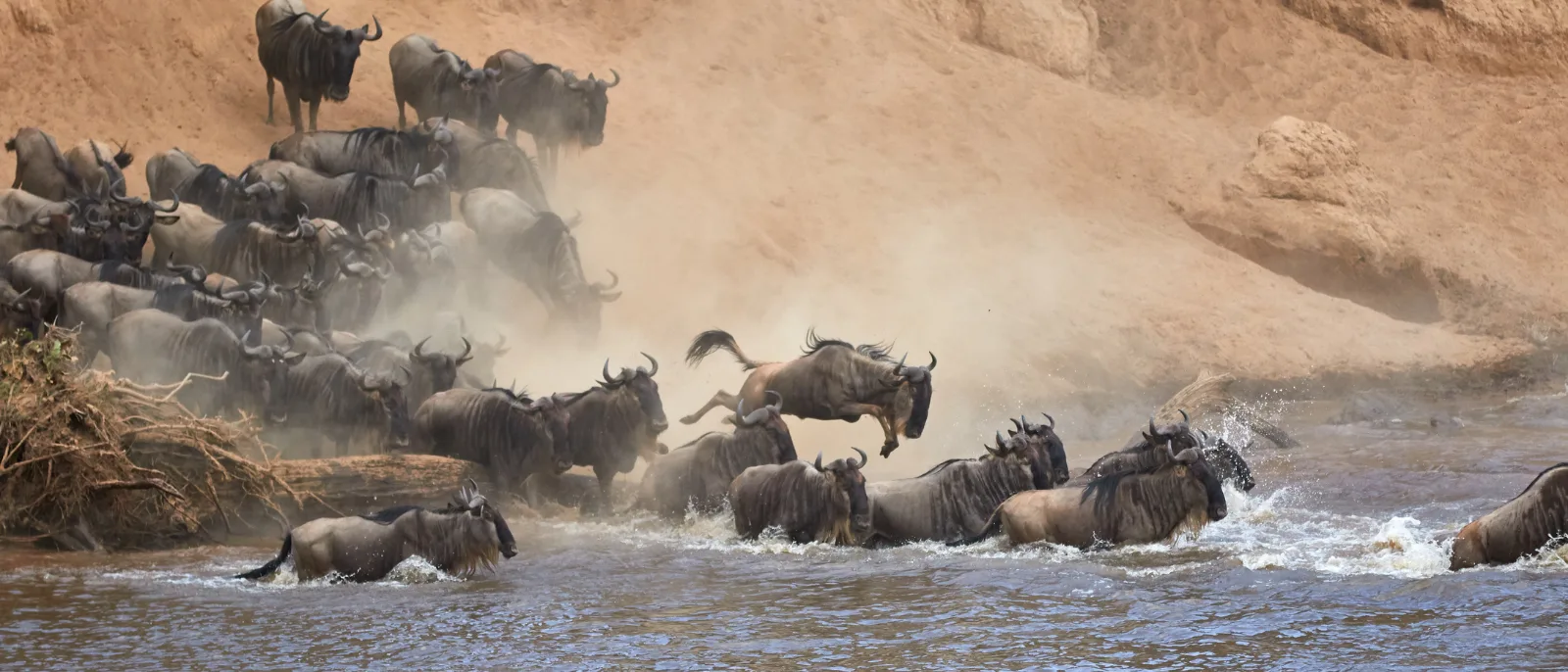
The Great Migration is the largest overland animal movement on earth, approximately 1.5 million wildebeest, 200,000 zebra, and 500,000 Thomson's gazelle travelling a continuous clockwise circuit between Tanzania's Serengeti and Kenya's Masai Mara in pursuit of fresh grazing and water. There is no start and no end; the herds are always moving. But the timing of their arrival in Kenya, and the heart-stopping Mara River crossings, is what draws safari travellers from around the world.
- January–March
The herds are in the southern Serengeti (Tanzania) for the calving season. Approximately 8,000 wildebeest calves are born daily during a concentrated three-week window in February, a feast for predators.
- April–May
As the long rains arrive in the south, the herds begin moving northwest through the central and western Serengeti, following the greening grass.
- June
The columns approach the Grumeti River in the western Serengeti, the first major water crossing of the cycle, patrolled by enormous Nile crocodiles.
- July–August
The herds reach the Mara River on the Kenya-Tanzania border. The river crossings begin, chaotic, thundering, perilous, and utterly mesmerising. This is the peak drama of the Migration and the most sought-after safari experience in Africa.
- September–October
The herds spread across the Masai Mara's grasslands, feeding on the lush post-rain grazing. Wildlife density in the Mara during this period is staggering, wildebeest as far as the eye can see, with predators exploiting the abundance. This is the peak season for Kenya safari tours focused on the Migration.
- November–December
Short rains signal the herds to begin moving south again, crossing back into Tanzania and beginning the long return to the southern Serengeti calving grounds.
For the most dramatic Migration experience in Kenya, book a Masai Mara safari between mid-July and mid-October. Request a camp or lodge positioned near one of the known crossing points along the Mara River. Our consultants track herd movements annually and position clients for the best possible timing. For detailed seasonal guidance, read our month-by-month guide to visiting Kenya.
Best Time to Visit Kenya for Safari
Kenya is a year-round safari destination, but timing your visit to align with your priorities, whether that is the Great Migration, optimal photography conditions, lower prices, or fewer crowds, makes a significant difference.
Dry Season
June – OctoberThis is peak safari season. Vegetation thins out, making wildlife easier to spot. Animals congregate around water sources. The Great Migration is in the Mara. Weather is cool and dry with clear morning skies. This is also the busiest and most expensive period, book well in advance.
Dry Season
January – FebruaryA secondary peak. Excellent game viewing across most parks, warm and dry conditions, and the Masai Mara is uncrowded (the Migration is in Tanzania). Good value compared to July–October.
Green Season
March – MayThe long rains. Some parks become muddy and certain roads are challenging, but landscapes are lush and green, newborn animals are everywhere, migratory bird species arrive, and prices drop 30–50%. Fewer vehicles in the parks means a more intimate experience. This is an underrated time for experienced safari travellers.
Green Season
NovemberShort rains bring brief afternoon showers but mornings are often clear. The Mara is emptying as the Migration heads south, but resident wildlife remains excellent. Prices are lower and lodges are quieter.
Month-by-Month Summary
| Month | Weather | Wildlife Highlight | Crowds | Price Level |
|---|---|---|---|---|
| January | Hot, dry | Excellent game viewing across parks | Moderate | Mid-range |
| February | Hot, dry | Calving season (Tanzania); Kenya parks superb | Moderate | Mid-range |
| March | Warm, long rains begin | Newborns, lush landscapes, birding | Low | Budget |
| April | Wet | Green season discounts, fewer visitors | Very low | Budget |
| May | Wet, rains easing | Landscapes at their most beautiful | Very low | Budget |
| June | Cool, dry | Migration approaching Mara; excellent visibility | Rising | High |
| July | Cool, dry | Mara River crossings begin | High | Peak |
| August | Cool, dry | Peak Migration, river crossings | Very high | Peak |
| September | Warm, dry | Migration herds across the Mara | High | Peak |
| October | Warm, short rains possible | Migration departing; still excellent | Moderate | High |
| November | Warm, short rains | Quiet parks, good game viewing | Low | Mid-range |
| December | Hot, clearing | Holiday season; parks busy around Christmas | High | High |
For a detailed breakdown with park-specific advice, read our complete guide to the best time to visit Kenya.
What to Expect on a Travelshoppe Safari
Before You Travel, Planning and Preparation

Every Travelshoppe safari begins with a conversation. Your consultant asks about your interests (Big Five, birding, photography, culture), preferred travel style (luxury, mid-range, camping), group composition (couple, family, solo, corporate group), budget parameters, and any special requirements. From that conversation, we design a bespoke itinerary tailored specifically to you, not a template package pulled from a shelf.
Your proposal includes detailed day-by-day itineraries, lodge or camp options with photos and descriptions, domestic flight or driving routes, park fees and inclusions, and a transparent cost breakdown. You review, ask questions, and refine. Once confirmed, we handle all bookings, park fee payments, domestic flights, ground transport, and travel documentation. You pack your bag and show up.
A Typical Day on Safari

05:30, Wake-up call. Tea or coffee delivered to your tent or room. 06:00, Morning game drive departs. The bush is alive: predators returning from the night's hunt, herbivores at waterholes, birds in full chorus. Your guide reads the landscape, tracks fresh signs, and communicates with other guides to locate key sightings. 09:00, Bush breakfast. A table set up under an acacia tree, or back at camp for a full hot breakfast. 10:00–15:00, Rest time. Relax at camp, swim, read, nap, enjoy lunch. Many camps offer nature walks, cultural visits, or spa treatments during midday. 15:30, Afternoon game drive. Different routes, different light. The golden hour before sunset produces the most dramatic photography conditions. 18:30, Sundowner. A cold drink in a scenic spot as the sun drops below the horizon. 19:30, Return to camp for dinner. In many camps, dinner is served outdoors under a canopy of stars, often around a fire.
Accommodation Options
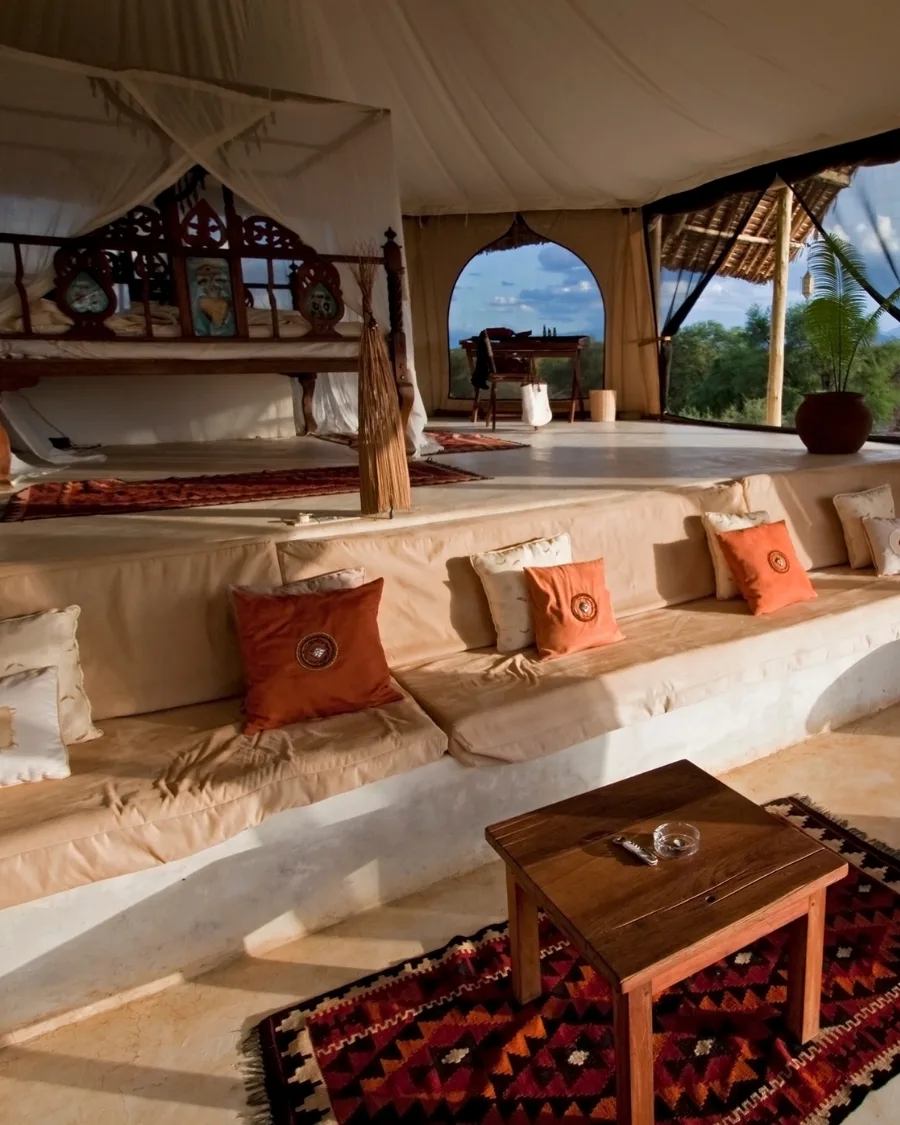
Luxury tented camps blend five-star comfort with an immersive bush setting, king-size beds, en-suite bathrooms with hot showers, private verandas overlooking waterholes or rivers, gourmet dining, and wine cellars stocked for sundowners. Camps like those in the Mara conservancies and Laikipia set the global standard for luxury safari accommodation.
Mid-range lodges offer comfortable rooms, buffet or set-menu dining, swimming pools, and knowledgeable resident guides. They represent excellent value and are the backbone of most Kenya safari itineraries.
Budget and camping options range from permanent tented camps with shared facilities to full-service mobile camping where a professional crew sets up and breaks down camp as you move between parks.
Community conservancy stays support local communities directly, with a percentage of your accommodation fee funding conservation, education, and healthcare programmes in surrounding areas.
Your Safari Guide, The Heart of the Experience

A great guide transforms a good safari into an unforgettable one. Ask which guide qualification, operator training and local experience apply to the itinerary; confirm the assigned guide and vehicle arrangements in writing where they are important to you.
Our clients regularly single out their guides by name in reviews. Guides like Joseph and Kamau appear repeatedly in our Google reviews, praised for their wildlife knowledge, patience with families, and ability to position vehicles for the perfect photograph. When you book a Travelshoppe safari, we match you with a guide whose expertise and personality align with your interests and group composition.
Safari Packing Essentials
Packing for a Kenya safari is simpler than most people expect. Here is what our consultants recommend based on decades of client feedback.
Clothing
- Neutral colours (khaki, olive, tan, grey) that blend with the bush.
- Layer for cool mornings and warm afternoons, a fleece or light jacket for dawn game drives, a sun hat, and comfortable closed-toe shoes for walking.
- Avoid bright colours and white (attracts insects and disturbs wildlife).
- Most lodges offer same-day laundry service.
Gear
- Binoculars (essential, even a budget pair transforms the experience).
- Camera with a zoom lens (200mm minimum recommended).
- Extra memory cards and batteries.
- A power bank for charging devices between game drives.
- And a headlamp or small torch for navigating camp after dark.
Health
- High-SPF sunscreen.
- Insect repellent (DEET-based recommended).
- Prescription medications.
- And antimalarial prophylaxis (consult your doctor at least four weeks before travel).
- A basic first-aid kit is advisable, though safari camps have medical supplies on hand.
Documents
- Carry the passport, entry authorisation, insurance and health documentation required for your nationality, route and destination.
- Check the official Kenya eTA portal, immigration authority and health authority guidance before travel; requirements can change.
What NOT to Bring
- Bright clothing.
- Camouflage patterns (restricted in some African countries).
- Drones (prohibited in national parks and reserves without KWS permits).
- And single-use plastic bags (banned in Kenya since 2017).
Sample Safari Itineraries
Our consultants design every itinerary from scratch, but these sample trips illustrate typical routing, timing, and what to expect at different durations and budgets.
3-Day Masai Mara Classic Safari

First-time visitors, short breaks, travellers adding a safari to a Nairobi business trip (bleisure travellers)
- Day 1Depart Nairobi early morning by road (approximately 5 hours via the Great Rift Valley viewpoint) or 45-minute flight to the Mara. Afternoon game drive.
- Day 2Full day in the Mara, morning and afternoon game drives covering different sectors of the reserve. Optional bush breakfast or picnic lunch. (Balloon safari add-on available.)
- Day 3Early morning game drive. Late morning departure for Nairobi, arriving by evening.
5-Day Kenya Highlights Safari (Amboseli + Tsavo)

Travellers wanting diverse landscapes without covering large distances
- Day 1Nairobi to Amboseli National Park (4-hour drive). Afternoon game drive with Kilimanjaro views.
- Day 2Full day in Amboseli, morning and afternoon game drives. Visit a Maasai village.
- Day 3Amboseli to Tsavo West. Afternoon visit to Mzima Springs and game drive.
- Day 4Full day in Tsavo, explore Shetani lava flows, Roaring Rocks viewpoint, and volcanic landscapes.
- Day 5Morning game drive in Tsavo East. Afternoon return to Nairobi (or continue to Diani Beach for a beach extension).
7-Day Ultimate Kenya Safari (Samburu + Lake Nakuru + Masai Mara)

Travellers wanting the full spectrum of Kenya's wildlife and landscapes
- Day 1Nairobi to Samburu National Reserve (5-hour drive or 1-hour flight). Afternoon game drive.
- Day 2Full day in Samburu, morning and afternoon drives along the Ewaso Ng'iro River. Seek out the Special Five.
- Day 3Samburu to Lake Nakuru National Park (drive via Nanyuki and the Rift Valley). Afternoon game drive focusing on rhino.
- Day 4Morning game drive at Lake Nakuru. Afternoon transfer to the Masai Mara.
- Day 5Full day in the Masai Mara, morning and afternoon game drives. Optional balloon safari at dawn.
- Day 6Full day in the Mara, explore a different sector or visit a private conservancy for walking safari and cultural interaction.
- Day 7Early morning game drive. Fly or drive back to Nairobi.
10-Day Grand Kenya Safari and Beach Extension

Travellers with time to experience both bush and beach, or honeymoon couples
- Days 1–7Follow the 7-Day Ultimate Safari itinerary above (Samburu + Lake Nakuru + Masai Mara).
- Day 8Fly from the Mara to Diani Beach or Lamu Island. Check in to a beachfront resort.
- Day 9Full day at leisure, snorkelling, dhow cruise, kite surfing, spa, or simply relaxing on the beach.
- Day 10Morning at leisure. Transfer to Mombasa airport or onward travel.
This bush-and-beach combination is one of our most popular itinerary formats and one that few other African destinations can deliver as seamlessly as Kenya.
Payments are Kenya-friendly: we accept M-Pesa, Visa, Mastercard, bank transfers (KCB, Equity, Co-op Bank), PayPal for international clients, and PesaPal.
Conservation and Responsible Safari Tourism
Kenya's wildlife exists today because of conservation, and safari tourism is one of the most powerful forces funding that conservation. Every park fee you pay, every conservancy bed night you book, and every community lodge you stay at contributes directly to the protection of the landscapes and species that make Kenya's safari experience possible.
Community Conservancies
Travelshoppe is committed to responsible tourism practices. We prioritise partnerships with lodges and camps that operate within community conservancies, models where local Maasai, Samburu, and other communities receive direct revenue from tourism in exchange for setting aside grazing land for wildlife. This approach has proven to be Kenya's most effective conservation strategy, protecting millions of acres of critical wildlife habitat outside the national park system.
KATO Code of Conduct
As KATO members, we adhere to the association's code of conduct for responsible tourism, including off-road driving restrictions, wildlife disturbance guidelines, waste management standards, and fair employment practices. We encourage our clients to engage respectfully with local communities, minimise plastic waste (Kenya has strict anti-plastic laws), and consider carbon offset programmes for their flights.
When you book a Kenya safari with Travelshoppe, you are not just having an extraordinary experience, you are directly contributing to the survival of the wildlife and the livelihoods of the communities that make this experience possible. That is a legacy worth travelling for.
Keep Exploring Kenya
Continue planning with our destination, travel-service and practical-guide pages.
Safari destinations
More ways to travel
Plan with Travelshoppe
Safari guides
Frequently Asked Questions About Kenya Safari Tours
How many days do I need for a Kenya safari?
What is the best time of year for a Kenya safari?
Is Kenya safe for safari tourists?
Can children go on safari in Kenya?
What is the Big Five and where can I see them?
What is the Great Migration and when can I see it in Kenya?
Do I need a visa to visit Kenya?
What vaccinations do I need for Kenya?
What should I pack for a Kenya safari?
Can I combine a safari with a beach holiday?
How do I book a safari with Travelshoppe?
Your Kenya Safari Starts Here
For more than 30 years, Travelshoppe has helped thousands of travellers experience Kenya safari tours that go far beyond the ordinary, handpicked lodges, expert guides, seamless logistics, and the kind of wildlife encounters that redefine how you see the natural world. As KATO members and a trusted Kenyan operator since 1994, we bring local authority and genuine passion to every itinerary we design.
Karibu. Let us craft your perfect Kenya safari.